
Build a Better Brain: How Movement, Lifelong Learning, and Gut Health Support Cognitive Wellness

One of the most exciting discoveries in modern neuroscience is that your brain is far more adaptable than once believed. For many years, scientists thought we were born with all the brain cells we would ever have and that cognitive decline was simply an unavoidable part of aging. Today, research paints a much more hopeful picture.
Your brain is constantly changing. It has the remarkable ability to strengthen existing neural connections, develop new ones, and adapt to the experiences you give it. This ability—known as neuroplasticity—means that the choices you make each day can influence how well your brain performs not only today but for years to come.
At Elevation Health University, we explored how movement, lifelong learning, nutrition, and gut health work together to create an environment where the brain can thrive. Rather than relying on one miracle solution, lasting brain health is built through consistent, intentional habits.
Feed Your Brain from the Inside Out
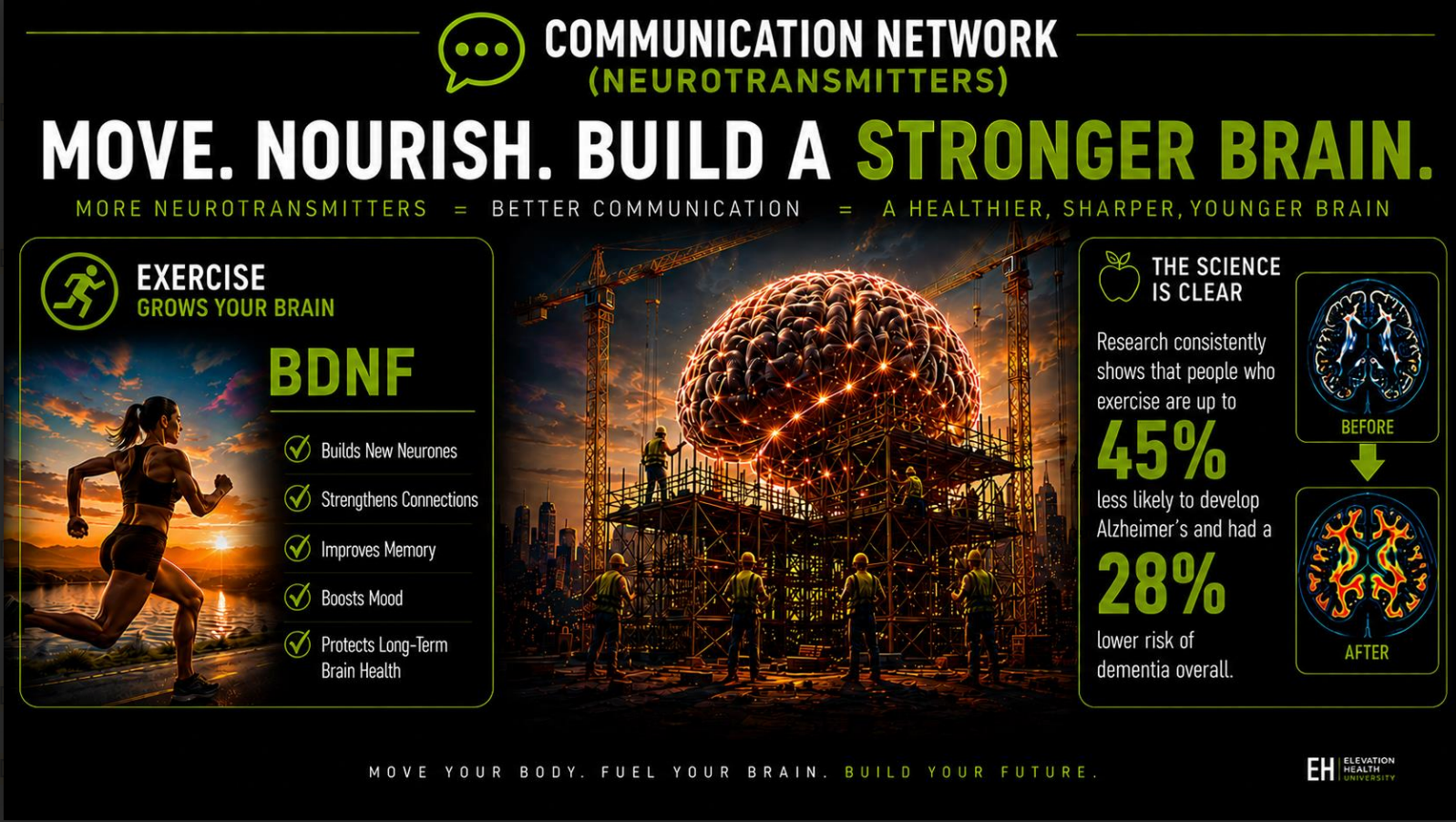
One of the key players in brain health is a protein called Brain-Derived Neurotrophic Factor (BDNF). Often described as "fertilizer for the brain," BDNF helps strengthen communication between brain cells, supports learning and memory, and encourages the formation of new neural pathways.
Unlike many aspects of health that feel outside our control, BDNF responds remarkably well to lifestyle choices. Healthy daily habits can naturally encourage its production, allowing the brain to remain resilient and adaptable throughout life.
Some of the most effective ways to support healthy BDNF levels include:
- Regular physical activity
- Quality, restorative sleep
- Eating whole, nutrient-dense foods
- Maintaining a healthy gut microbiome
- Moderate coffee consumption
Coffee, in particular, has received increasing attention in scientific research. Its naturally occurring polyphenols possess antioxidant and anti-inflammatory properties that may help support cognitive health. However, quality matters. A freshly brewed cup of quality coffee is very different from a sugar-loaded specialty beverage filled with syrups and processed ingredients.
As with most aspects of nutrition, the goal isn't perfection—it's making choices that consistently support long-term health.
Why Movement Is One of the Best Brain Boosters
Exercise is often recommended for maintaining a healthy weight or improving cardiovascular health, but one of its greatest benefits may be what it does for the brain.
Every time you move, your body increases circulation, delivers oxygen to the brain, stimulates healthy neurotransmitters, and encourages the production of BDNF. These changes strengthen communication between neurons while supporting memory, focus, emotional well-being, and mental clarity.
Research continues to demonstrate that physically active individuals are significantly less likely to experience cognitive decline as they age. Even moderate, consistent movement can make a meaningful difference.
Some activities challenge both the body and the brain simultaneously, making them especially beneficial:
- Tennis and other racket sports
- Ballroom dancing
- Swimming
- Walking
- Cycling
- Gardening
Activities that combine coordination, balance, strategy, and movement encourage your brain to adapt and grow while keeping your body active.
The most effective exercise program isn't necessarily the most intense—it's the one you'll enjoy enough to make part of your lifestyle.
Keep Challenging Your Brain
One of the most empowering aspects of neuroplasticity is realizing that learning doesn't stop with age.
Your brain responds to challenge. Every new experience encourages it to strengthen existing pathways while creating new ones. In other words, lifelong learning is one of the best investments you can make in your cognitive health.
Simple ways to stimulate your brain include:
- Reading books
- Learning another language
- Playing a musical instrument
- Traveling to unfamiliar places
- Starting a new hobby
- Solving puzzles or strategy games
- Rearranging your environment or daily routine
Each new challenge asks your brain to solve problems in different ways, helping build what researchers often refer to as cognitive reserve—the brain's ability to remain resilient throughout the aging process.
Education is valuable, but lasting transformation comes from applying what you learn. Healthy habits only produce results when they become part of your daily life.
The Gut-Brain Connection Is Stronger Than You Think
Modern science continues to reveal the remarkable relationship between the digestive system and the brain. This communication network, commonly called the gut-brain axis, demonstrates that the health of your digestive system influences far more than digestion alone.
Your digestive tract contains an extensive network of nerves that communicates continuously with the brain. It also houses trillions of beneficial bacteria that help regulate inflammation and support the production of important neurotransmitters involved in mood, memory, relaxation, and sleep.
Some of the brain-supporting functions influenced by a healthy gut include:
- Mood regulation
- Emotional well-being
- Memory
- Sleep quality
- Stress response
- Cognitive performance
Because much of the body's serotonin is produced within the digestive system, caring for your gut becomes an important part of caring for your brain.
Healthy eating habits, a diverse diet rich in fiber, and supporting a balanced microbiome all contribute to better overall neurological health.
Small Daily Habits Lead to Lifelong Brain Health
When people think about improving brain health, they often search for one breakthrough supplement or the latest wellness trend. The reality is both simpler and more encouraging.
Brain health is built through consistent choices repeated over time.
Instead of focusing on dramatic changes, begin with practical daily habits:
- Move your body every day.
- Continue learning new things.
- Stay mentally curious.
- Prioritize quality sleep.
- Eat whole, nourishing foods.
- Support a healthy gut.
- Care for your nervous system.
None of these habits may seem extraordinary on their own, but together they create the conditions that allow your brain to continue adapting, learning, and thriving throughout every season of life.
Final Thoughts
The remarkable thing about the human brain is that it was designed to change. Every healthy choice you make—whether it's taking a walk, reading a book, learning a new skill, nourishing your gut, or simply choosing to stay curious—helps strengthen your brain's ability to serve you for years to come.
Protecting your brain doesn't require perfection. It requires consistency.
At Elevation Health, our mission is to empower individuals and families with the knowledge and tools needed to build healthier lives. Through education, chiropractic care, and intentional lifestyle choices, we believe everyone has the opportunity to support a stronger nervous system and a healthier future.
The brain you're shaping tomorrow depends on the choices you make today. Invest in it wisely, and it will continue to serve you for a lifetime.